
Reliable,
integrated AI.
In production.
Today’s discussion
An AI engineering partner for regulated enterprises
We architect, build and run practical AI systems inside the enterprise. We leverage the tools, data and workflows a business already depends on.
“GN are the rare partner who takes AI from whiteboard to operations without losing the thread. Deep engineering, clear communication, zero drama.”
Craig A. Cook · Founder & CEO, Mobilads





Most AI programs stall before production
$4.4T in annual value is on the table, and 70% of initiatives stall before scale. MCKINSEY GLOBAL INSTITUTE · 2026
The money has moved to making AI actually do the work
Firms that close the gap for you
They put AI to work inside your company: lab-backed deployment teams, independent implementers, platforms.
This is where Global Nodes works.
Firms that close it for themselves
They do the work themselves with AI: AI-native law firms, security and contact centres, roll-ups of accounting firms.
You will be pitched by both
Ask every vendor for systems running in production, not demos. The mid-market is underserved, so the best partners are still available.
SaaS was about enabling work functions. AI-native services are about delivering the actual work.
Most of AI transformation has little to do with AI
The model is the part everyone sees. The outcome depends on the work underneath it.
Systems that stay up on Tuesday.
One work order: 38 seconds and one approval
Urgent: HVAC unit failing at Store 214
Hi team, Store 214 (Columbus, OH) reports rooftop unit 3 blowing warm air since this morning. Store opens at 9. Please raise against PO 88213, quoted at $5,150. Priority 1, customer-facing area.
Thanks, Dana
Approval needed. PO 88213 covers $4,200; the quote is $5,150. The unit is under warranty to 2027, so labour is $0. Proposed: send the warranty vendor and cap the PO at $1,180 for parts.
Smaller teams, more leverage
Becoming AI-native requires reinventing almost every role
Prototyping with AI, engineering for production
Clickable prototypes, UI explorations and feasibility spikes, built in hours on sample data.
e.g. a demo for Friday’s board meeting
- Touches real customer or employee data
- Someone will rely on its output
- Writes to a system of record
- Falls in regulatory scope
A prototype is never promoted. If it crosses the gate it becomes the specification, and the build starts clean.
e.g. “Can a model read our warranty claims?”
- Threat model reviewed
- Engineer review · every AI-assisted change
- Unit and integration tests passed
- Evaluation suite above threshold
- Build signed and reproducible
- Deployed · audit log written
Built to be owned, audited and run by your team, with every gate enforced in CI.
e.g. fraud scoring on live payments
The model is rented. The harness is yours.
Five tests decide: agent, automation or human
Tests 1 to 4 ask whether a task can be automated at all. Test 5, judgment in the middle, decides whether it needs an agent.
Not everything should be an agent
Seven AI platforms built by Global Nodes
Each platform serves one executive function and includes a copilot that answers questions from its data.
From whiteboard to launch
Results from systems in production
Secure AI across seven layers
Security decides who can reach your AI, and what it is allowed to do once they do.
“In regulated AI, even an error message is a regulated change.”Lesson from RecoveryAI, built for the FDA De Novo pathway under HIPAA and SOC 2
Choose the sovereignty level per data class
Sovereignty decides whose laws, servers and suppliers your AI depends on. We set it by jurisdiction, residency, cost and access risk.
Hybrid routing Sensitive requests go to local models, everything else to frontier APIs, decided per data class.
“The value of IP no longer exists in software.”Chamath Palihapitiya, All-In Podcast, 2026
- 01Photo editorVideo editorPhoto libraryopen sourcePetaPixel · Oct 2026 ↗Someone rebuilt free, open-source versions of Photoshop, Premiere and Lightroom using AI
Products can be rebuilt
Photoshop, Premiere and Lightroom have already been rebuilt as free, open-source tools using AI.
- 02
Services are going headless
Agents call vendor APIs directly. The screen you license matters less every year.
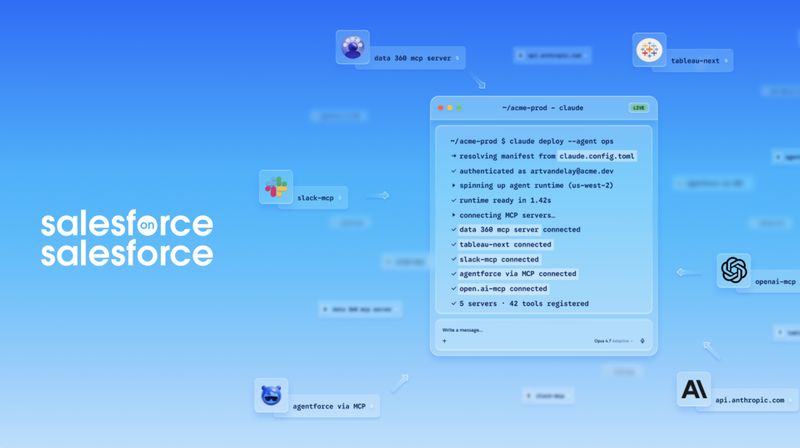 Salesforce blog · 2026 ↗Why Salesforce shifted to headless IT operations (and ditched the browser)
 - 03
Build what solves your problem
Your process, data and judgment, encoded in software you own.
You own what we (and you) build
All source code, models, designs and documentation are owned by the enterprise. Fewer licence fees and locked-in vertical solutions; more tools you own. The only constant is continuous innovation.
- Run it yourselves, or with anyoneYour team or another vendor can take over. Nothing to buy back.
- Change models as the market movesThe layer around the model is yours, so switching provider is engineering work, not a contract.
- Answer auditors directlyYou hold the code, prompts and logs that explain how every decision was made.
- Source codeIn repositories under your organisation
- Prompts and agent definitionsThe logic that governs AI behaviour
- Evaluation suitesTest sets and pass thresholds
- Fine-tuned weightsAdapters and the training data behind them
- Pipelines and infrastructureAs code, in your cloud account
- Designs and runbooksArchitecture, operations and handover
A small pod sized to each phase, from a tech lead to forward deployed engineers who embed with your team. Priced by role and outcome rather than headcount, scaled up or down between phases, and every line of code, IP and know-how handed over at the end.
The limit on software used to be engineering.
Now it’s mostly imagination.
Greg Isenberg

Thank you.
- 01 · Week 1–2AI stack scanEvery tool and process screened, the 3 highest-value builds sized and scoped.
- 02 · Week 3–8Your data, your platformOne platform on your data, inside your perimeter.
- 03 · Week 9+ProductionHardened, governed and owned by your team.
Questions and discussion
Describe an industry, a business problem or a concern. Responses draw only on work we have delivered and on how we operate.
Suggested questions